
In today’s world, where renewable energies are rapidly replacing traditional sources, solar systems play a key role in providing clean and stable electricity. The solar inverter is one of the most important components of these systems, without which solar energy cannot be effectively used in residential or industrial applications.
In this guide from Fitco Magazine, we provide a comprehensive overview of what a solar inverter is, how it works, its types, and why choosing the right inverter is essential to optimize energy consumption and increase the efficiency of a solar system. We also introduce industrial solar inverters and their connection to industrial solar panels to help you select the best option for your needs.
What is a Solar Inverter?
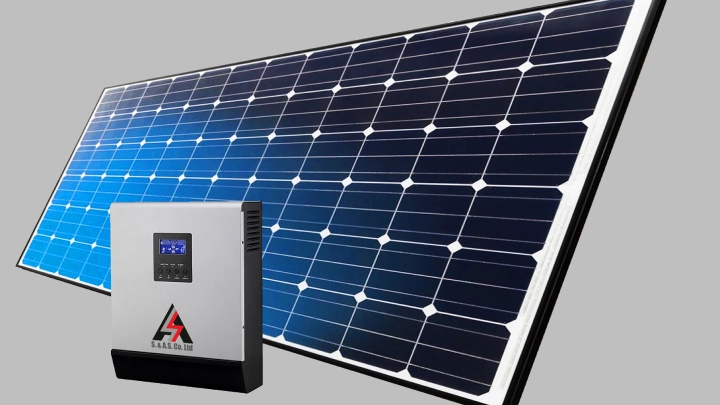
A solar inverter is an electronic device that converts the direct current (DC) produced by solar panels into alternating current (AC). Since most electrical appliances and the national power grid operate on AC, electricity generated by solar panels is practically unusable without an inverter.
Key Role of Solar Inverters in Solar SystemsThe solar inverter is often called the “brain” of a solar system. Its main functions include:
- Energy conversion: Converts DC from solar panels into AC suitable for residential and industrial use.
- Optimizing panel performance: Controls output to prevent energy loss.
- Increasing system efficiency: Modern inverters with MPPT (Maximum Power Point Tracking) maximize the output power of solar panels.
- Grid interaction: In on-grid systems, inverters are crucial for transferring electricity to the public grid.
- Protecting electrical equipment: Equipped with protective systems against overvoltage, short circuits, and other electrical fluctuations.
How a Solar Inverter Works
- Receiving DC power from solar panels
Industrial solar panels absorb sunlight and generate DC electricity, which is sent to the inverter. - Input voltage optimization
Advanced inverters with MPPT ensure the optimal voltage and current are received from the panels, minimizing energy loss. - Converting DC to AC
Using advanced electronic circuits, the inverter converts DC into AC for use by industrial and household devices. - Synchronizing frequency and voltage with the grid
In on-grid systems, the inverter matches AC output to grid standards to enable energy use or injection into the public network. - System monitoring and control
Modern inverters include intelligent monitoring systems to track energy production, system efficiency, voltage fluctuations, and consumption. - System protection
Inverters have built-in mechanisms to protect panels, equipment, and consumers from surges, overvoltage, high temperatures, and short circuits.
Types of Solar Inverters and Their Differences
On-Grid Inverters
- Designed for systems connected to the public electricity grid.
- Synchronize voltage and frequency with grid standards.
- Do not require batteries but cannot supply electricity during outages.
- Suitable for commercial and industrial solar plants selling surplus power to the grid.
Off-Grid Inverters
- Used in standalone systems not connected to the grid.
- Usually paired with batteries to store energy for times without sunlight.
- Ideal for remote locations, such as rural homes, telecom stations, and solar water pumps.
Hybrid Inverters
- Combine features of on-grid and off-grid inverters.
- Can supply power, store surplus electricity in batteries, and use it when needed.
- Can inject power into the grid while storing energy.
- Ideal for businesses needing both energy storage and grid sales.
Advantages of Using a Solar Inverter
- Reduced electricity costs and ROI
- Converts solar energy into usable electricity, lowering utility bills.
- In grid-tied systems, surplus power can be sold to the grid.
- High energy conversion efficiency
- Converts solar energy with maximum possible efficiency (often >98%).
- Reduced reliance on fossil fuels
- Supports clean energy, lowers greenhouse gas emissions, and reduces environmental impact.
- Supports energy storage and backup power
- Hybrid inverters can store energy in batteries for use during outages.
- Low maintenance and long lifespan
- No moving mechanical parts; lifespan typically 10–20 years.
- Smart monitoring and control
- Advanced inverters provide online monitoring and automatic fault detection.
Disadvantages of Using a Solar Inverter
Performance depends on the quality of panels, batteries, and wiring; issues in any component can affect the inverter.
High upfront cost
Initial purchase and installation can be expensive, though cost-effective long-term.
Periodic maintenance required
Inverters require inspection and maintenance after several years; dust, heat, and humidity can affect performance.
Reduced efficiency under certain weather conditions
Extreme heat, high humidity, or low-light conditions can reduce efficiency.
Shorter lifespan compared to solar panels
While panels may last 25+ years, some inverters need replacement after 10–15 years.
Dependence on other system components